Loading...
Serving North Little Rock, AR and surrounding areas. (501) 737-2421
Master Little Rock Concrete is a licensed concrete contractor serving Little Rock, AR, with expertise in foundation installation, concrete driveway building, and slab work on the city's expansive clay soil. We have served Central Arkansas homeowners since 2024, pulling permits through the Little Rock Building Services Division on every permitted job.
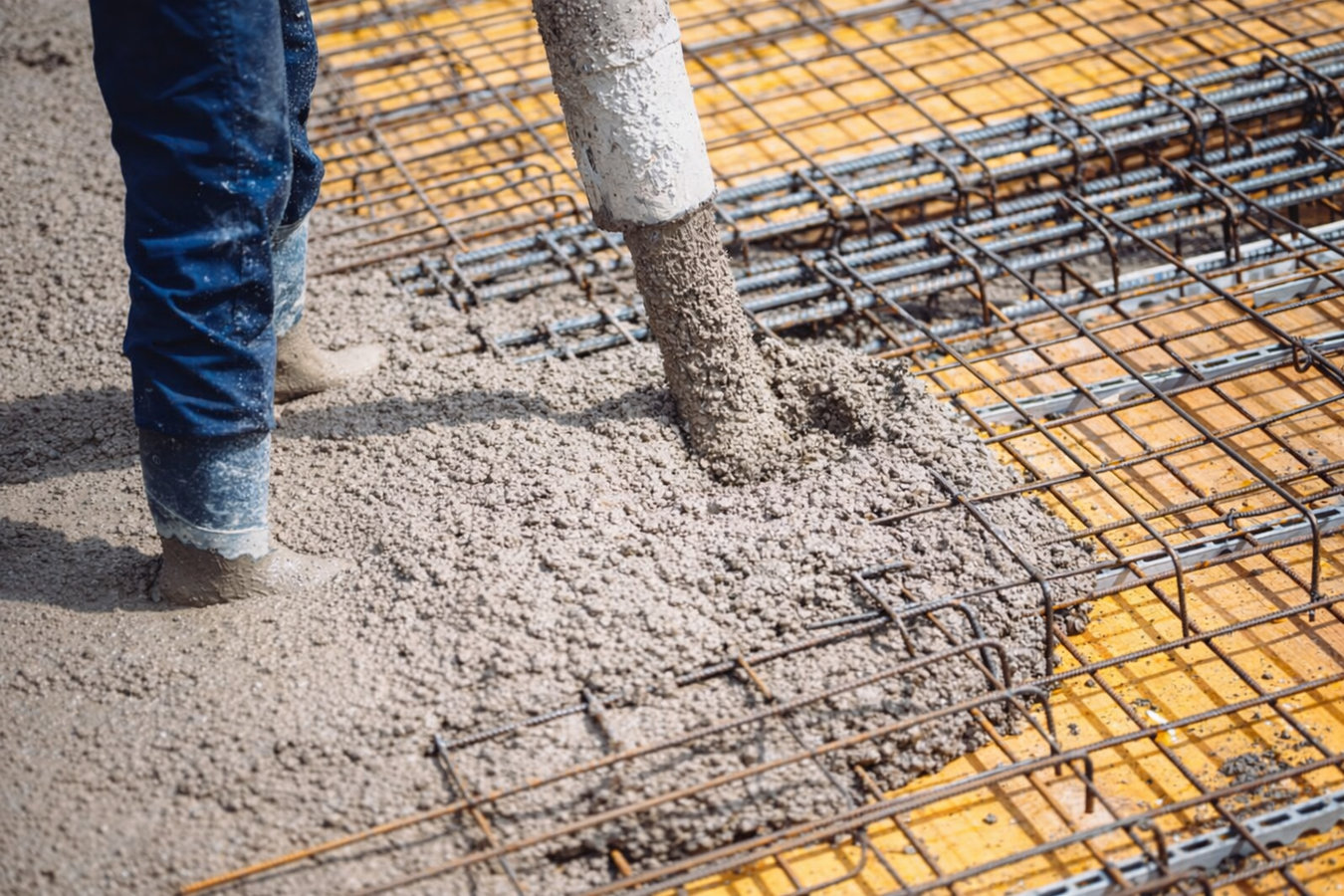
Little Rock's clay soil expands and contracts every season, putting constant stress on any foundation sitting on top of it. We prepare the site specifically for local soil conditions - proper compaction, drainage grading, steel reinforcement, and a city inspection before we pour a drop of concrete. Read more about our foundation installation service.
Driveways in Little Rock's older neighborhoods - Hillcrest, Broadmoor, Leawood - sit on clay soil that has been cycling wet and dry for 50 or more years. We build driveways with the base prep and thickness needed to hold up through that movement, not just look good on pour day.
Newer construction in West Little Rock neighborhoods like Chenal Valley relies on properly poured slab foundations, while older homes near UALR and downtown sometimes need their original slabs replaced. We handle both new pours and replacements with full permit and inspection coverage.
Little Rock's outdoor living season is long, and a well-built patio adds real usable space to your home. We account for clay soil movement in every patio pour - proper base prep, control joints, and drainage slope - so the surface stays level and intact after the first few wet seasons.
When Little Rock's clay soil contracts through a dry summer, foundations can settle unevenly - and sticking doors, diagonal cracks at window corners, and uneven floors are the signs. Foundation raising corrects the settling and stabilizes the structure before the movement causes more expensive damage.
Additions and detached structures in Little Rock - garages, sunrooms, covered porches - need properly sized footings that reach stable soil below the clay layer's seasonal movement zone. Under-built footings on clay are the most common reason additions shift and crack away from the main house.
Little Rock sits on some of the most challenging soil in Arkansas for concrete work. The expansive clay that underlies much of the city swells when it absorbs rain and shrinks when it dries out, and it does this every single year. Every time it moves, it pushes on whatever concrete is sitting above it - driveways, patios, slabs, foundations. Contractors who pour concrete here the same way they would on sandy or loamy soil in another region are giving you a product with a short lifespan. That is why base preparation in Little Rock is not a quick step - it is the whole job. According to the University of Arkansas Cooperative Extension Service, expansive clay soil is one of the most common causes of structural damage to homes and foundations in the state.
The city's housing stock ranges widely from neighborhood to neighborhood. The Quapaw Quarter and Hillcrest have Victorian, craftsman, and early 20th-century brick homes with foundations that have been through almost a century of Arkansas weather. Broadmoor and Leawood have mid-century brick ranch homes whose original driveways and slabs are now 50 to 60 years old. West Little Rock's newer subdivisions are seeing 1990s and 2000s construction reach an age where driveways crack and slabs start to show drainage problems. Each type of property requires different scope and different care, and local experience is what lets a contractor read those differences correctly before giving you a quote.
We work regularly in Little Rock and coordinate permits through the Little Rock Building Services Division. For foundation and major slab work, that means we know the inspection scheduling process and what the city requires at each stage - so your project does not stall while we figure out local procedures.
Little Rock is a city of distinct neighborhoods, and each one presents something different for a concrete crew. The older homes in Hillcrest and the Heights are on tight lots with mature trees whose roots run close to driveways and walkways. The Quapaw Quarter's historic district has properties with preservation considerations that affect how work is scoped and what materials are appropriate. West Little Rock's larger lots in Chenal Valley and Pleasant Valley have more space but also more variation in site drainage. Properties near the Arkansas River and Riverfront Park can sit on lower-lying ground with slower drainage - a real factor for foundation design. We have worked in all of these areas and bring that familiarity to every estimate.
From Little Rock, we also serve homeowners in Maumelle just across the river to the northwest, and in Benton to the southwest along I-30.
Call or message us and tell us what you need - a new foundation, a driveway replacement, or a patio pour. We respond within 1 business day and schedule a free on-site visit at your convenience.
We visit your property to assess the soil, drainage, existing concrete, and access conditions. You receive a written estimate that separates demolition, permits, materials, and labor - with cost questions addressed here before a single shovel goes in the ground.
We submit the permit application to the City of Little Rock and schedule the required inspection. Once approved, the crew prepares the site - removing old concrete, grading, compacting, and forming - then pours the concrete. Summer pours are scheduled for early morning to protect the cure.
After the pour, we walk you through the curing timeline and what to avoid during that period. You receive the final permit inspection paperwork confirming the work passed city review - documentation that protects you at resale.
We serve Little Rock homeowners directly across all neighborhoods - from Hillcrest to Chenal Valley. Call or fill out the form and we will get back to you within 1 business day.
(501) 737-2421Little Rock is Arkansas's state capital and largest city, with a population of about 202,000 people. It sits on the south bank of the Arkansas River and anchors a metro area of roughly 750,000 people. The city has some of the most architecturally varied housing stock in the state. The Quapaw Quarter near downtown has Victorian and Queen Anne homes built between 1880 and 1920. Hillcrest and the Heights have craftsman bungalows and Tudor-style homes on tree-lined streets. Broadmoor and Leawood are dominated by mid-century brick ranch homes. West Little Rock - neighborhoods like Chenal Valley and Pleasant Valley - has newer construction from the 1980s through today. The city's two main landmarks are the Little Rock Central High School National Historic Site and the Clinton Presidential Center on the riverfront, both of which most residents can navigate to without a map.
About half of Little Rock's housing units are owner-occupied, with a particularly high concentration of homeowners in the Heights, Hillcrest, and West Little Rock. Many of those homes are now at the age where driveways, slabs, and foundations need real attention rather than cosmetic patches - the mid-century brick ranches in Broadmoor and Leawood have original concrete flatwork that is 50 to 60 years old. We serve Little Rock homeowners across all of these neighborhoods, as well as communities just outside the city. Homeowners in Maumelle to the northwest and North Little Rock just across the river are all within our regular service area.
Durable concrete driveways built to last through Arkansas weather.
Learn moreCustom concrete patios designed for outdoor comfort and curb appeal.
Learn moreSafe, code-compliant sidewalks for residential and commercial properties.
Learn moreEngineered retaining walls that hold back soil and prevent erosion.
Learn morePrecision concrete floor pours for homes, shops, and warehouses.
Learn moreHeavy-duty concrete parking lots for commercial and industrial sites.
Learn moreServing these cities and communities.
Call Master Little Rock Concrete or send us a message. We serve homeowners across Little Rock and Central Arkansas with licensed, permitted work built for local soil conditions.